
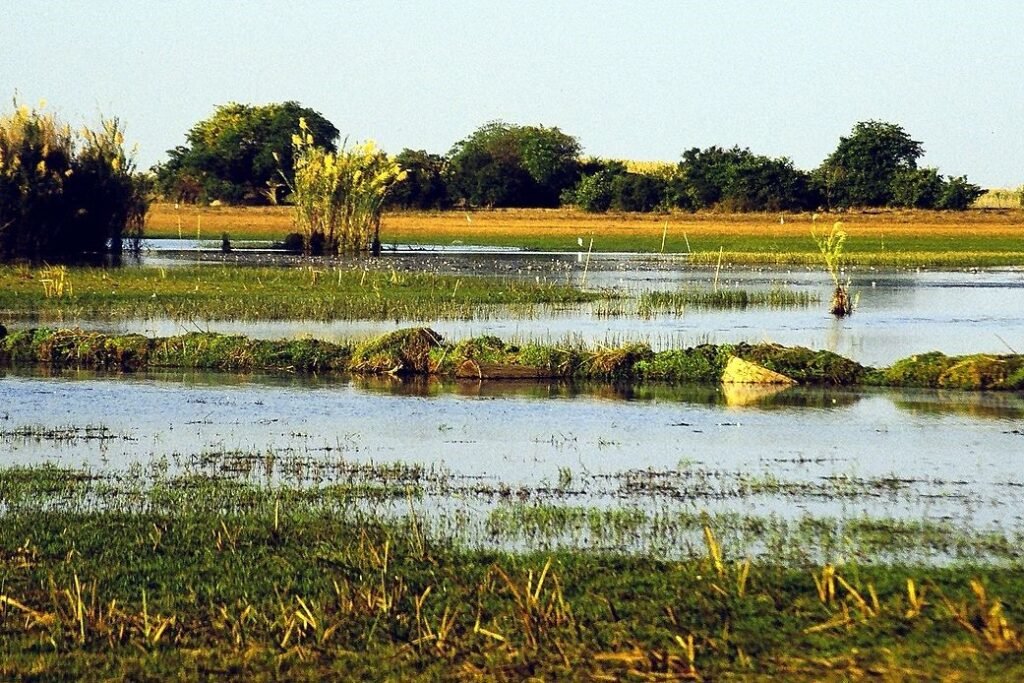
Bangweulu Swamps is an enormous wetland wilderness of low islands, reed beds, floodplains and shallow lagoons, situated in the northern part of Zambia. The swamps are found in a shallow depression at the centre of an ancient cratonic platform. The basin is fed by 17 principle rivers from a catchment area of 190,000 square kilometres, but is drained by only one river, the Luapula. Unique to the floodplains of the Bangweulu swamps is the water loving black lechwe, which can gather in herds of up to 10,000, following the floodwaters as they recede during the year. Also found here is the rare antelope, the sitatunga, which lives only in wetland areas. Other antelope in the Bangweulu include oribi, tsessebe, common duiker and reedbuck. Less commonly seen are roan, wild dog and vervet monkeys, as well as smaller more nocturnal mammals such as mongoose and bush pigs.
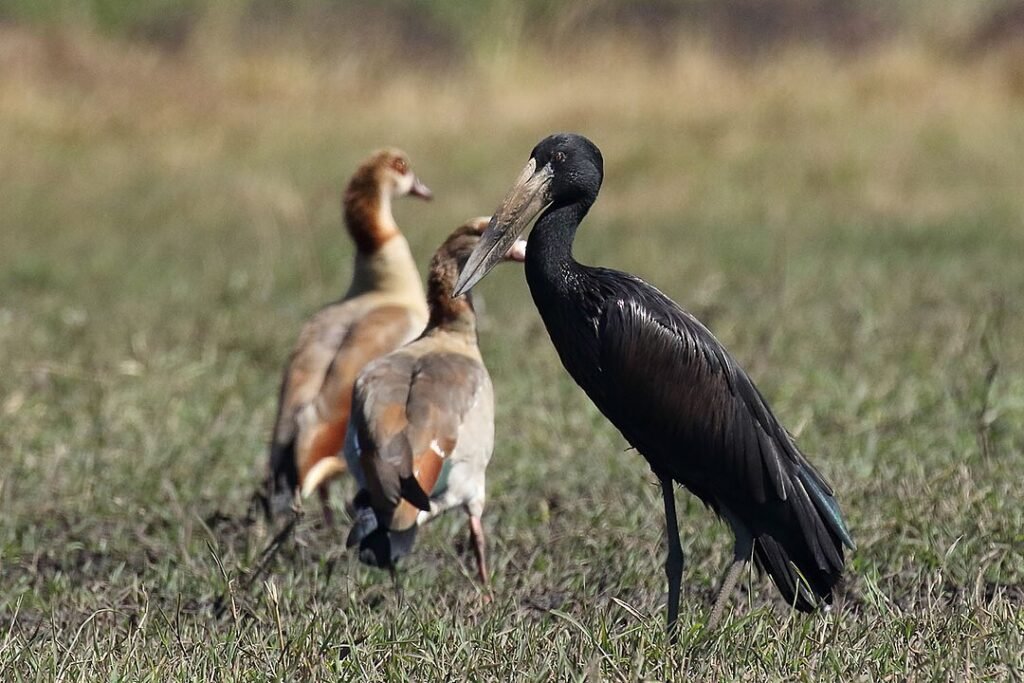
Although rarely seen, leopards do exist while hyenas and jackals are often heard at night and occasionally encountered on night drives. Numerous crocodiles and hippos are found in the permanent water channels or lurking in the papyrus reeds. Buffalo and elephant move into the area when the flood waters have receded to feed on the plentiful grasses. The bird life here is inspiring. One of the rarest and most elusive birds in Africa, the shoebill stork, which is in fact closer to the pelican family than a stork, favours the Bangweulu Swamps as one of their last remaining habitats. During the early months following the rains, this strange looking bird can regularly be seen on the fringe between the permanent swamps and the floodplains.